Ceiling Mounted Curtain Rod, 48–84 Inch
Matte Black · Ceiling or Wall Mount
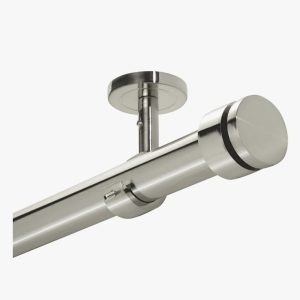
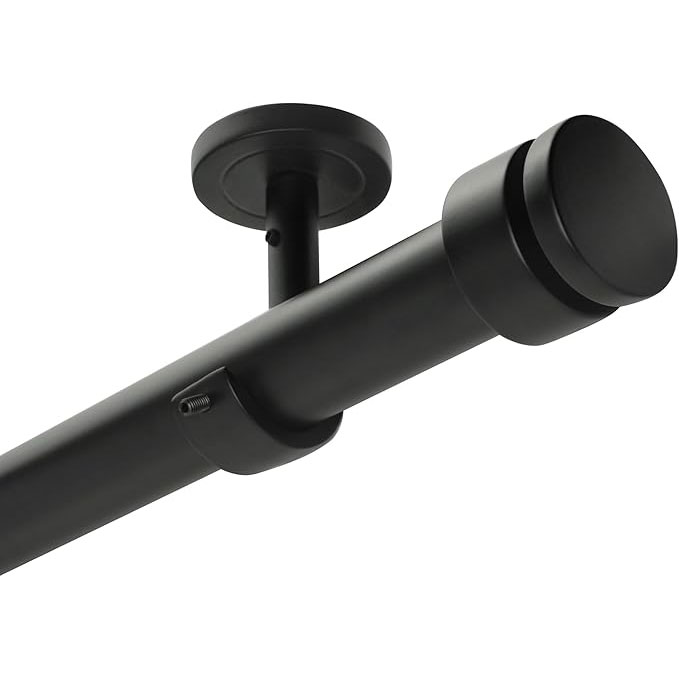
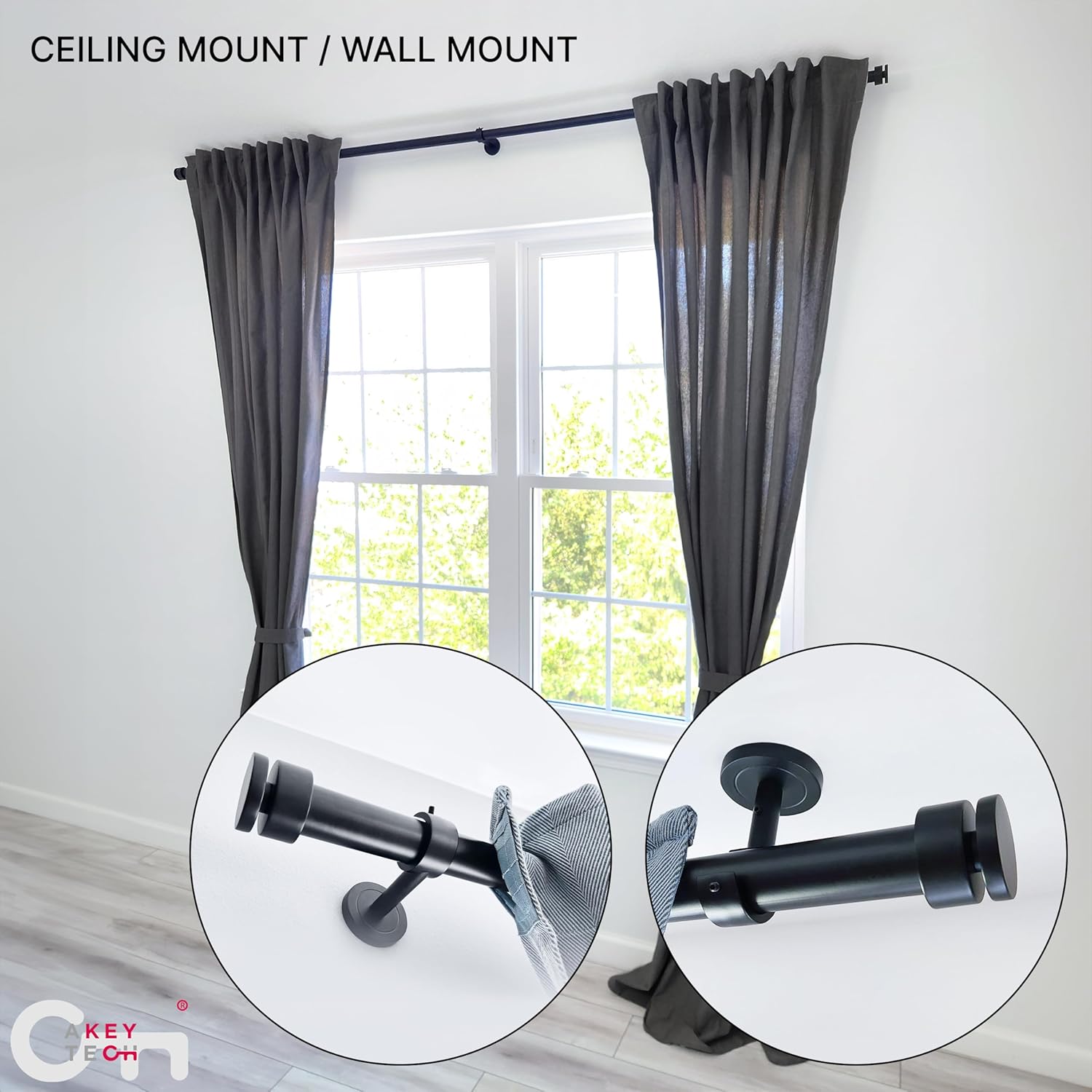
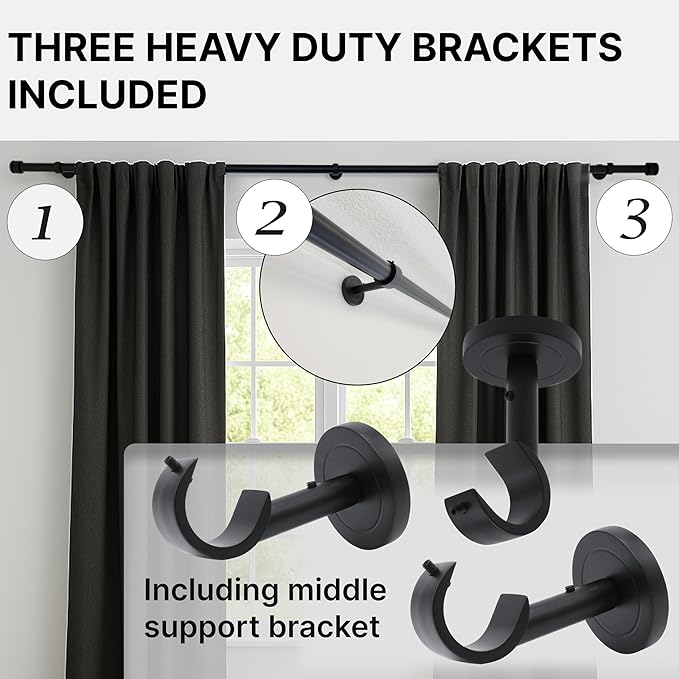
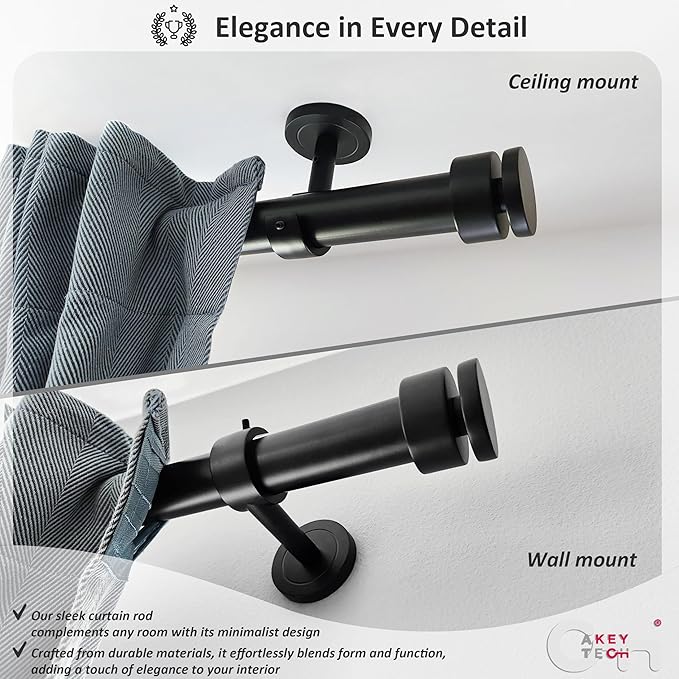
A ceiling mounted curtain rod for floor-to-ceiling curtains and for windows with no wall space above the frame. Three brackets screw into the ceiling, one of them in the center. The rod adjusts from 48 to 84 inches, holds up to 20 lb and mounts on the wall too.
$59.99
Buying for a project or a store? Trade pricing from 6 units


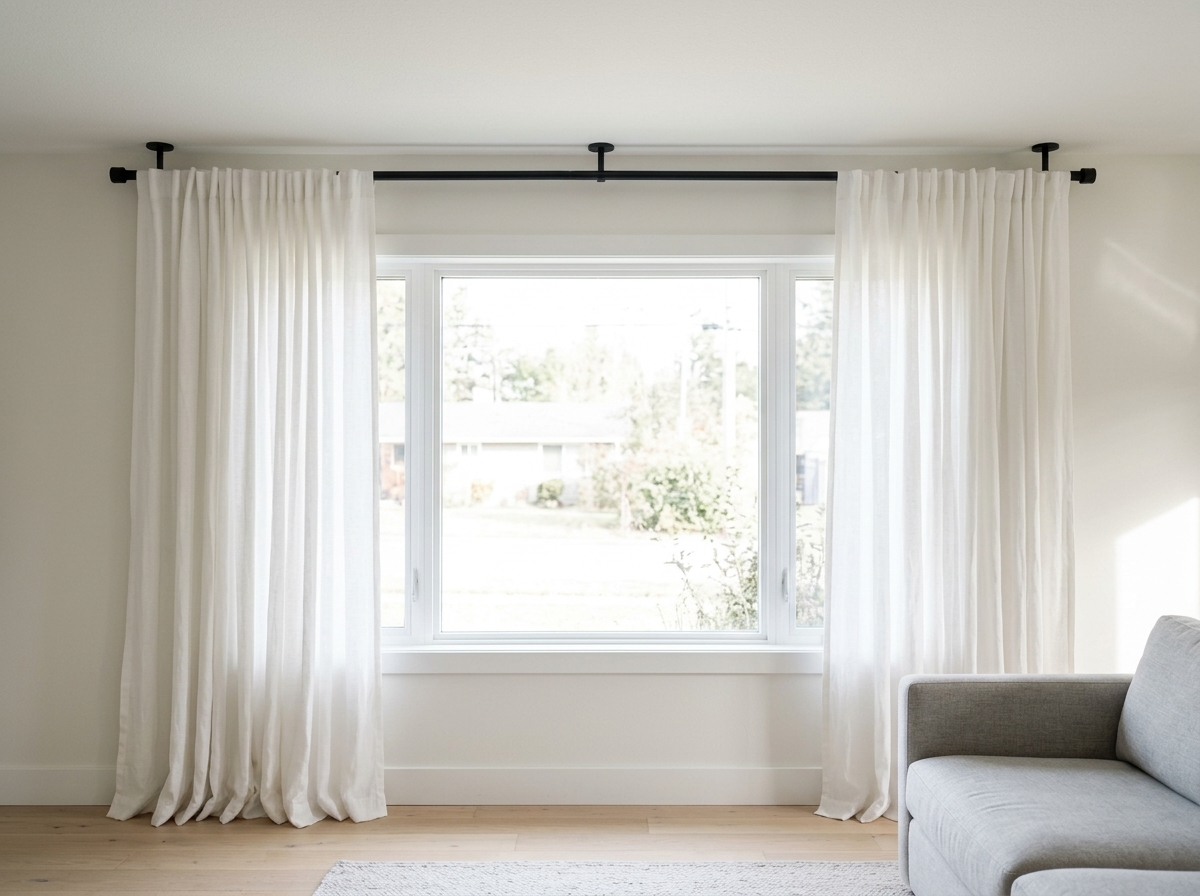
Hangs from the ceiling
Three brackets screw into the ceiling, so the rod goes up even when the window, trim or crown molding leaves no wall above the frame.
Where it helpsSits as far from the wall as you need
A wall rod is limited by how far its brackets reach. On the ceiling, you pick the line, so the curtain clears deep sills, blinds and radiators.
Find the lineFits windows up to 76 inches wide
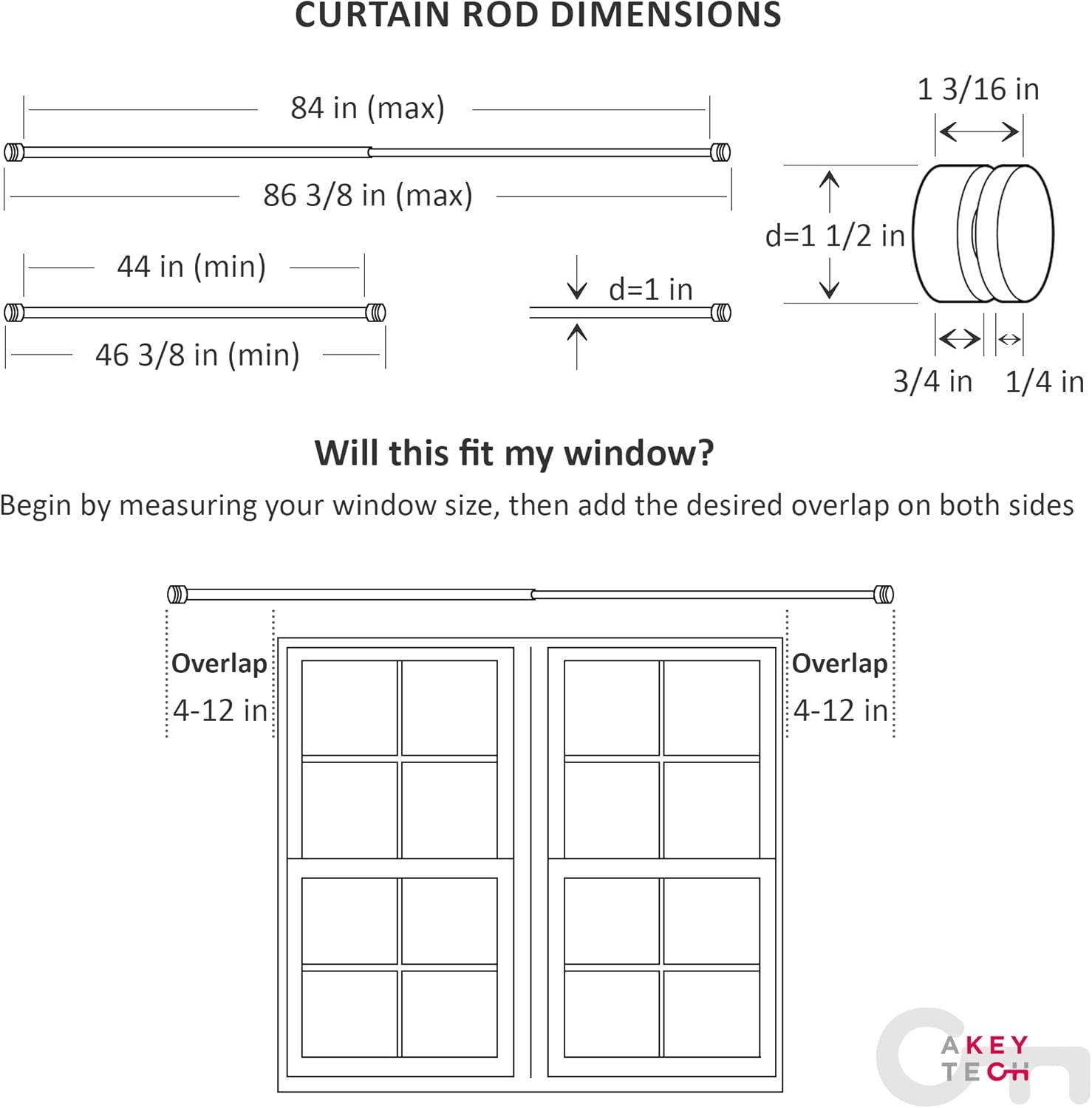
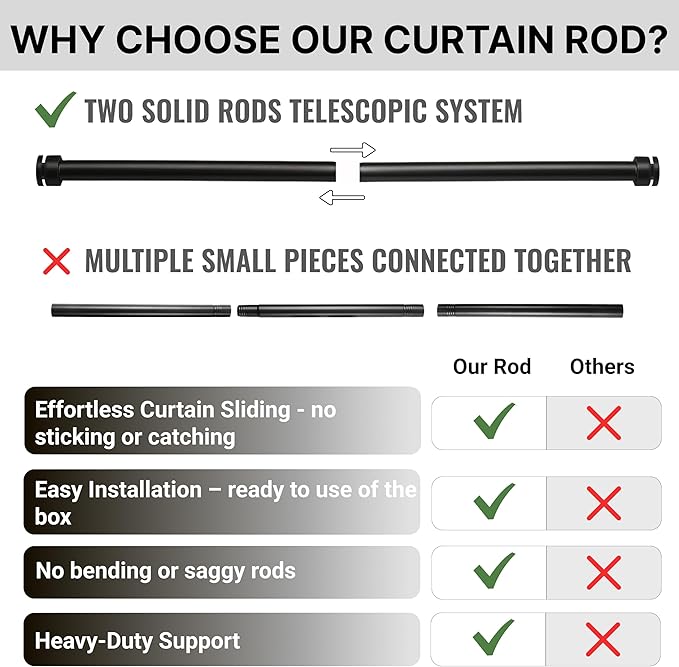
The rod adjusts from 48 to 84 inches and is 1 inch thick, so it takes most curtain rings and grommet panels.
Find your length
Will It Fit? Rod Length and Where to Mount It
Rod length for floor-to-ceiling curtains
Floor-to-ceiling curtains look best when the rod runs wider than the window. Open panels then stack on the wall, not over the glass, and the window looks larger. Plan 6 to 10 inches past each side of the frame. Go down to 4 inches only when a side wall or a corner is close.
Size table: window width to rod length
| Window frame width | Extra on each side | Set the rod to |
|---|---|---|
| 36 in | 6 in | 48 in |
| 48 in | 8 in | 64 in |
| 54 in | 10 in | 74 in |
| 64 in | 10 in | 84 in |
| 72 in | 6 in | 84 in |
| 76 in | 4 in | 84 in |
The rod tops out at 84 inches. That covers a window up to 76 inches wide with 4 inches on each side. For a wider window, you need a longer rod.
How far from the wall to mount the rod
On the ceiling, the rod can go as far out from the wall as the curtain needs. Work it out in three steps:
- Measure from the wall to the front of the deepest thing at the window: the trim, the sill, the blinds’ headrail, a crank handle or a radiator.
- Add 2 to 3 inches, so the fabric hangs free and doesn’t rub.
- The result is the distance from the wall to the center of the rod. Mark it at both ends of the rod line.
Example: the sill sticks out 3 inches and the blinds sit behind it. Add 2 inches, and the rod center goes 5 inches from the wall.
Don’t go farther out than you need. The closer the rod is to the wall, the less light gets around the edges of the curtain.
Need a curtain to divide a room or to hang a shower curtain from the ceiling? The room divider curtain rod is this same rod in brushed nickel: the same three ceiling brackets and the same 20 lb rating. Only the finish differs.
Fits your window?
20 lb · 48–84 in. Three brackets and installation kits included.
Why Hang Curtains From the Ceiling
There are three good reasons to hang curtain rods from the ceiling. There’s no wall above the window. You want the room to look taller. Or you want less light coming in over the top of the curtain. If none of these apply, a wall rod is simpler to install.
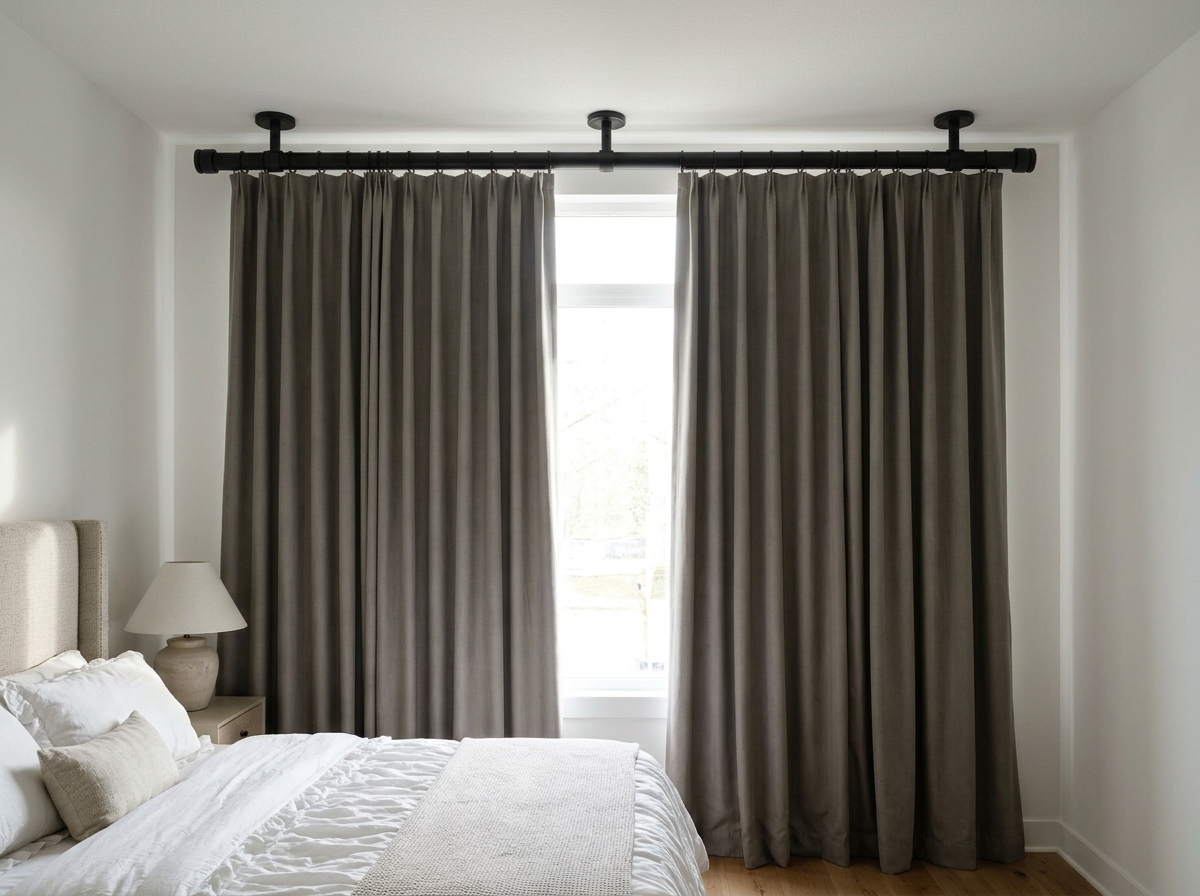
No wall space above the window
In many rooms the window sits right under the ceiling, or crown molding fills the few inches between them. A wall bracket needs flat wall to screw into, and there isn’t any. A ceiling bracket screws into the ceiling right in front of the window instead. The same fix works in rooms with low ceilings, where a wall rod would end up squeezed against the molding.
Floor-to-ceiling curtains make a room look taller
When curtains start at the ceiling and fall to the floor, the eye follows one long vertical line. The window looks bigger and the ceiling looks higher. That works on a standard 8-foot ceiling, not just in lofts. Let the panels just touch the floor or float half an inch above it. A gap of several inches at the bottom breaks the line.
Blackout curtains leak less light from the ceiling
A rod on the wall leaves a strip between the top of the curtain and the ceiling, and light comes through it. With a ceiling mounted curtain rod, the curtain starts at the ceiling, so that strip is gone. Mount the rod close to the wall and let the panels run past the frame on both sides, and a bedroom gets noticeably darker. Most pairs of blackout panels weigh well under the 20 lb this rod holds.
High ceilings and tall windows
On a 10- or 12-foot ceiling, the ceiling mount works the same way. Two things change. Ready-made curtains rarely come longer than 120 inches, so you may need custom-length panels. And you need a ladder tall enough to work at the ceiling with both hands free. Measure the curtain length at the actual rod line. Floors and ceilings in older homes are often not level.
Curtains around a bed
The same rod hangs bed curtains from the ceiling. Mount it above the head of the bed for a simple canopy, or along one side to screen the bed from the room. Set the rod a little wider than the mattress: about 64 to 70 inches over a queen bed, which is 60 inches wide, and 84 inches over a king, which is 76. Sheer or light linen panels work best here. This is a straight rod and it doesn’t turn corners, so curtains on more than one side of the bed need one rod per side.
How Much It Holds: 20 lb on Three Brackets
This rod is rated for 20 lb of curtains. The rating covers the panels, the rings or clips and any liner together. That’s enough for lined linen, cotton and most blackout curtains on one window. On the ceiling, the load hangs straight down from each bracket, so the third bracket in the middle matters: it takes a share of the weight and keeps the center of the rod from bowing. Switch between two and three brackets below to see the difference.
Illustration, not to scale.
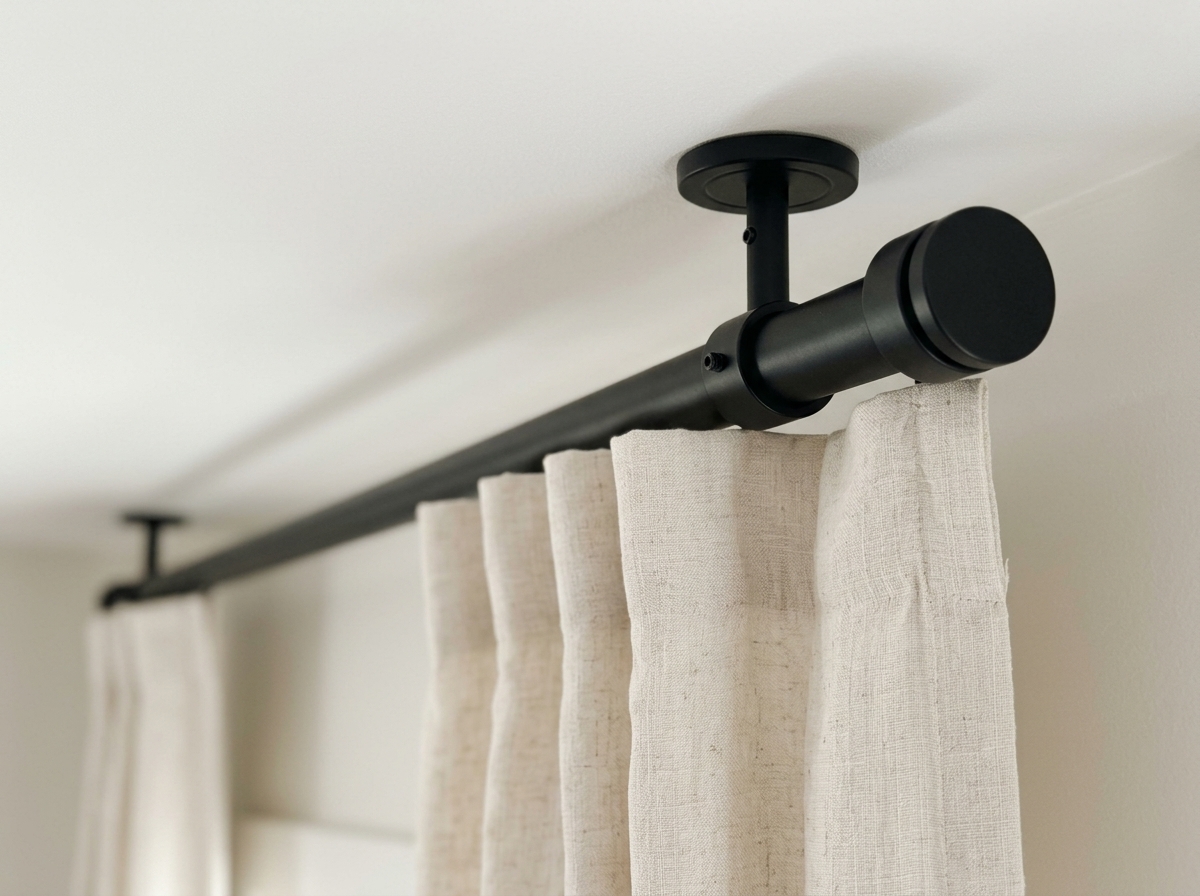
Three ceiling brackets, one in the middle
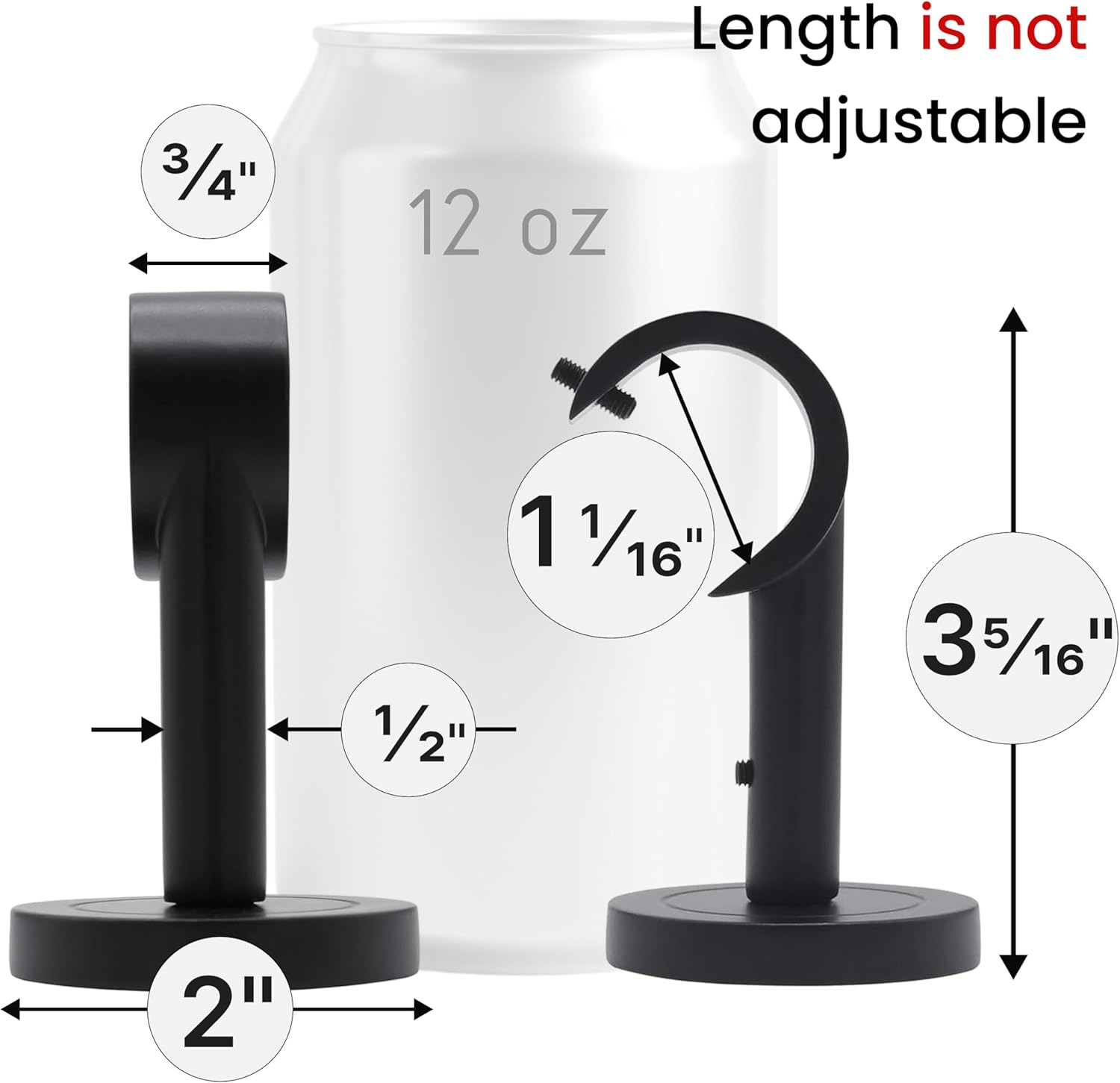
Each bracket has a flat round base that screws to the ceiling and a short stem that holds the rod just below it. Two brackets go near the ends and one goes in the center. The rod and brackets are aluminum, and the whole set weighs about 3 lb, so the ceiling carries little extra weight before the curtains go up.
Hang one panel on each side of the center bracket. Rings can’t slide past a bracket stem.
Curtains heavier than 20 lb
If your drapes weigh more than 20 lb, this rod isn’t the right choice, and a heavy duty ceiling mount isn’t either. Heavy fabric holds better on a wall, with brackets screwed into studs. The heavy duty curtain rod holds 40 lb on three wall brackets that reach up to 6 inches from the wall.
Matte Black on a White Ceiling
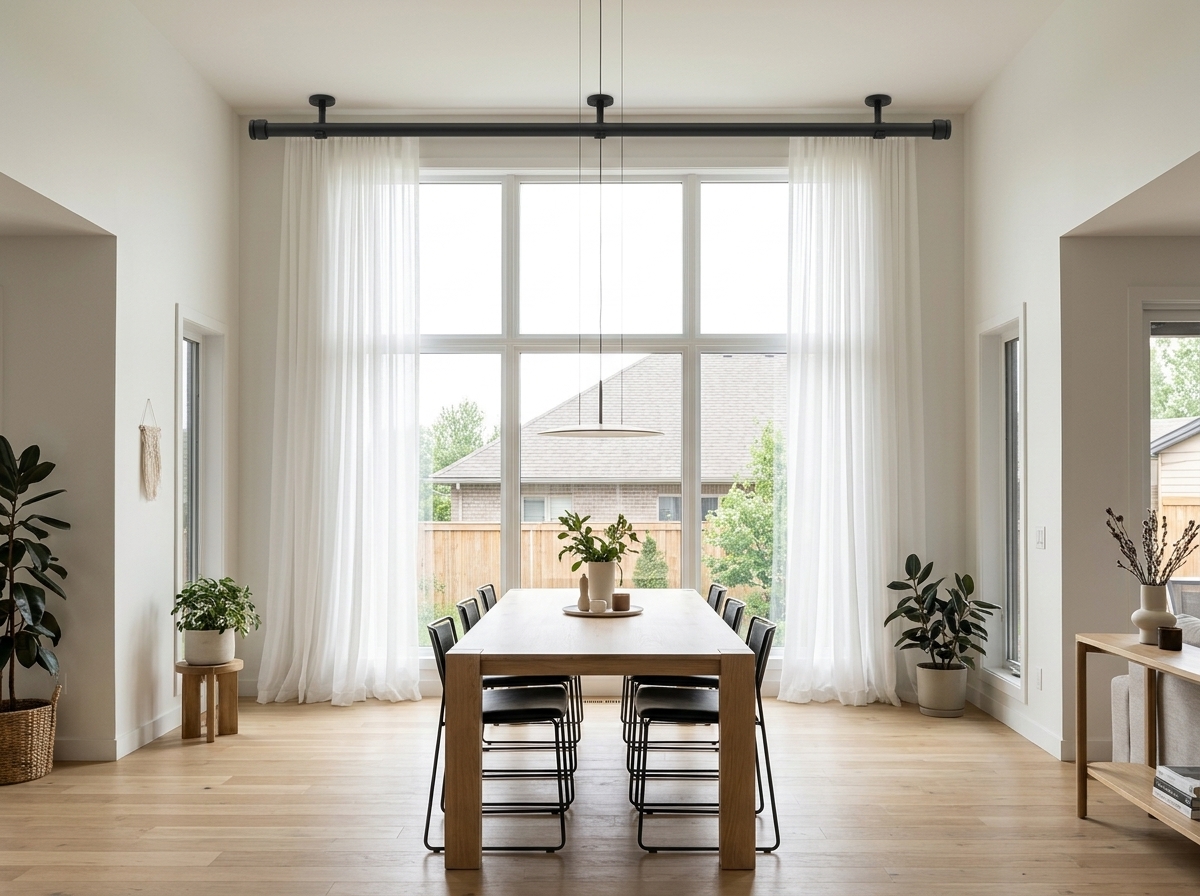
On a white ceiling, a matte black rod reads as one thin, deliberate line along the top of the window. It works like the edge of a picture frame. It ties in with black window frames, black pendant lights and black cabinet pulls. The flat end caps, with no ball finials, keep that line clean. That suits modern, Scandinavian and industrial rooms.
The contrast is strongest with white, cream and oatmeal curtains. With charcoal or navy panels, the rod almost disappears into the fabric. If you want the hardware to fade into a white ceiling instead, the brushed nickel version is the lighter choice.
Specifications and What’s in the Box
Key specifications
- Rod Length
- 48–84 in (telescopic)
- Rod Diameter
- 1 in
- Weight Capacity
- 20 lb
- Mounting Type
- Ceiling or Wall
- Material
- Aluminum
- Color
- Black
Product details
- Product Type
- Curtain Rod
- Brand
- A Key Tech
- Model Number
- BLC4884
- Item Weight
- 3 lb
- UPC
- 676525745667
- Amazon ASIN
- B0D98HNVF4
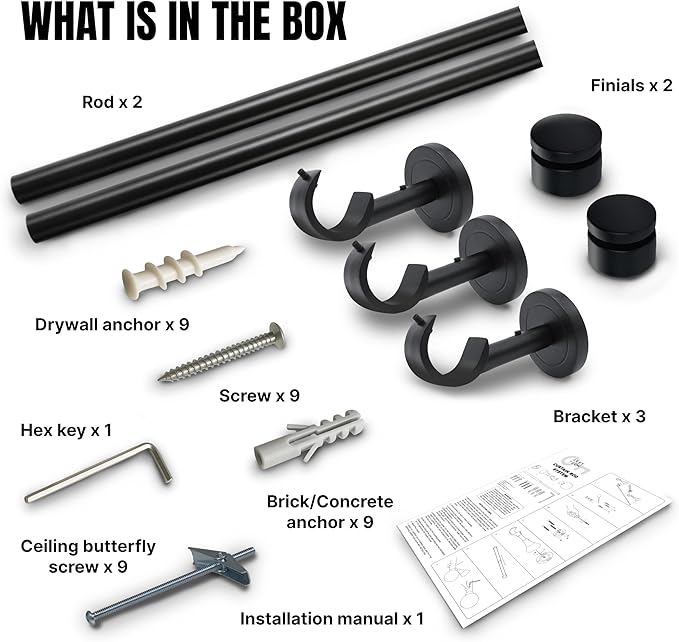
What’s in the box
- 1 telescoping rod that adjusts from 48 to 84 inches
- 3 ceiling brackets, including the center support
- 3 installation kits, one for each bracket
How to Hang a Curtain Rod From the Ceiling
Plan about 45 minutes, and ask someone to help: working overhead is easier with one person holding and one driving screws. You need a drill, a stud finder, a tape measure, a pencil, a straightedge or chalk line and a sturdy step ladder.
- 1Mark the rod line
- 2Mark the three brackets
- 3Find the ceiling joists
- 4Drill the holes
- 5Screw the bases to the ceiling
- 6Load the curtains
- 7Set the rod in the brackets
- Step 1 of 7
Mark the rod line. At each end of the window, measure out from the wall by the distance you worked out above and mark the ceiling. Connect the two marks with a straight line.
- Step 2 of 7
Mark the three brackets. Mark the end brackets on the line a few inches in from where the rod will end. Mark the center bracket exactly halfway between them.
- Step 3 of 7
Find the ceiling joists. Run a stud finder along the line. If a bracket mark lands within an inch of a joist, move it onto the joist.
- Step 4 of 7
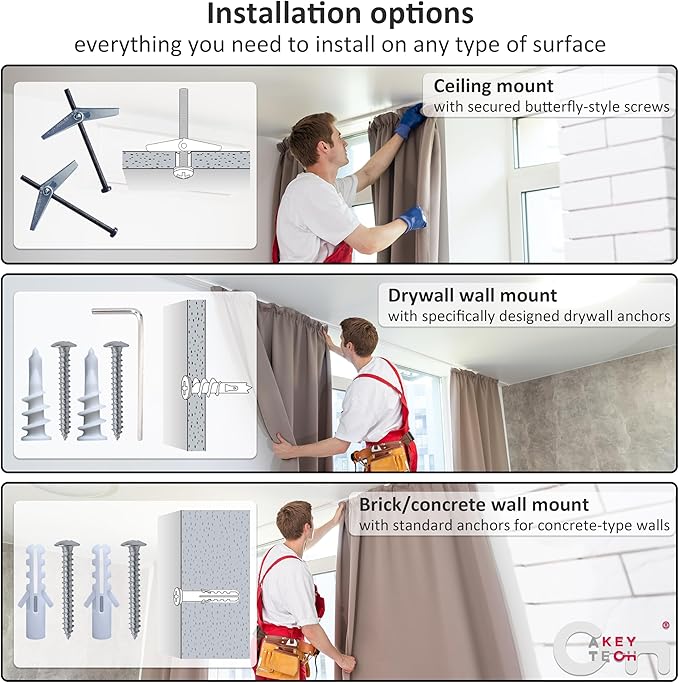
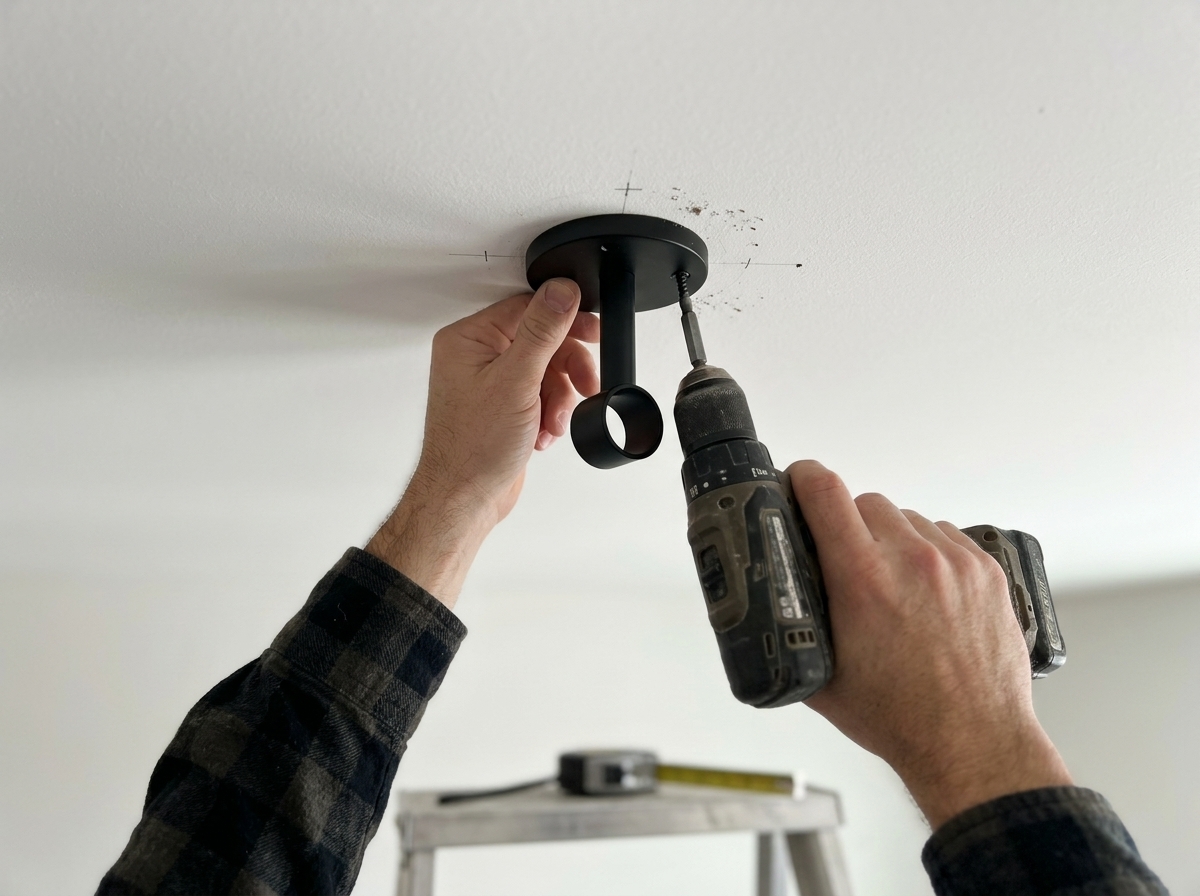
Drill the holes. Hold each bracket base on its mark and mark the screw holes. Drill pilot holes into joists. Where there’s only drywall, set anchors made for ceilings.
- Step 5 of 7
Screw the bases to the ceiling. Drive the screws until the base sits flat and tight. Don’t overtighten into drywall.
- Step 6 of 7
Load the curtains. Extend the rod to length on the floor. Slide on the rings or panels, one panel on each side of the center.
- Step 7 of 7
Set the rod in the brackets. Lift it into all three holders, center it so the ends stick out evenly, and secure it.
Joists, drywall and plaster ceilings
A screw in a wood joist is the strongest hold you can get on a ceiling. Joists usually run 16 or 24 inches apart. If the rod runs across them, at least one bracket often lands on wood. If it runs along them, check whether moving the line an inch closer to or farther from the wall puts it on a joist, as long as the curtain still clears.
In drywall alone, the curtain pulls straight down, and that’s where plastic expansion anchors hold worst. Use toggle bolts or other anchors rated for ceilings. Old plaster ceilings need a masonry bit and toggle bolts.
Mounting it on the wall instead
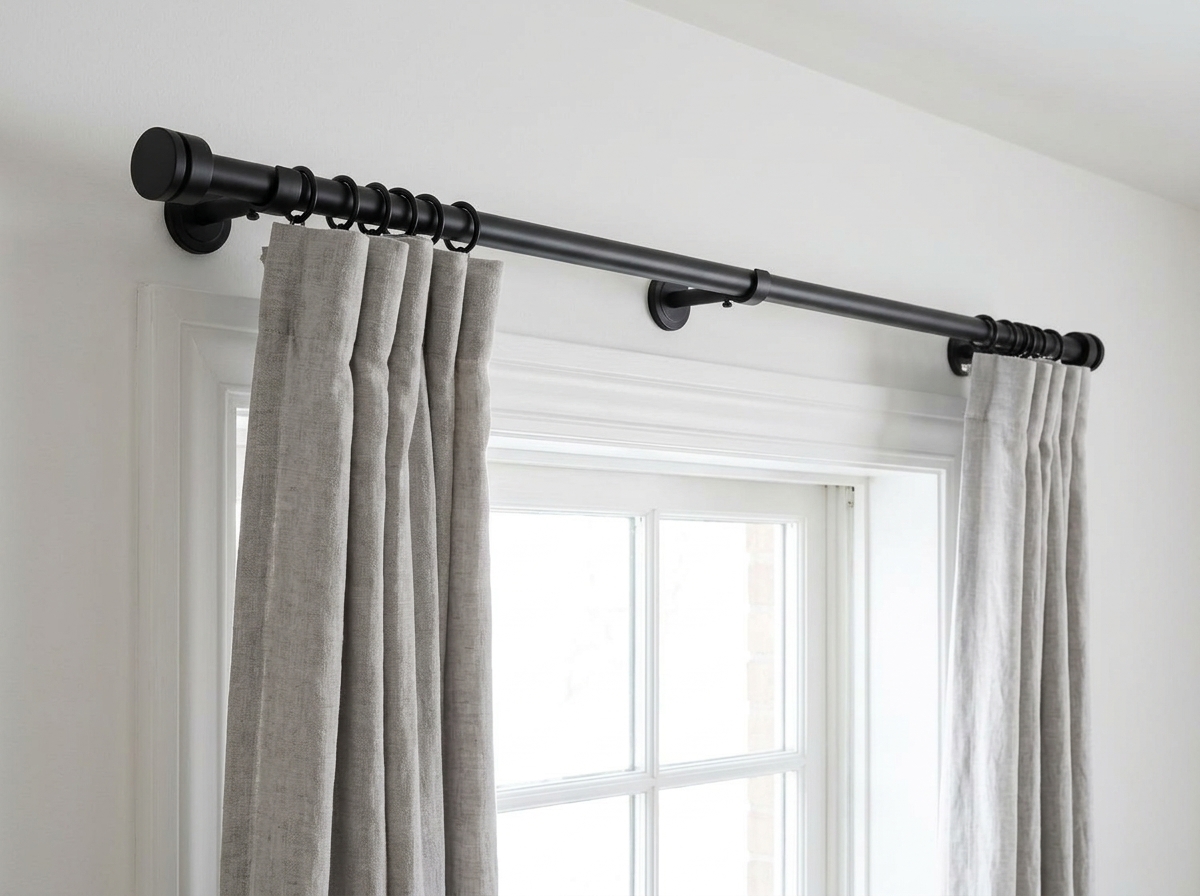
The bracket bases screw to a wall the same way they screw to a ceiling. The stem then sticks straight out and holds the rod in front of the wall. Choose the wall when you can’t drill a concrete ceiling, or when you’d rather patch a wall than a ceiling after you move out. Mark all three brackets at the same height and level them before you drill.
Ceiling Single vs Double Rod vs Heavy Duty Wall Rod
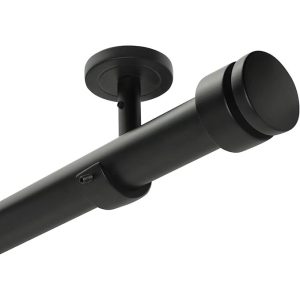
Ceiling, Single
- Holds
- 20 lb
- Length
- 48–84 in
- Projection
- Ceiling mount
- Mount
- Ceiling or Wall
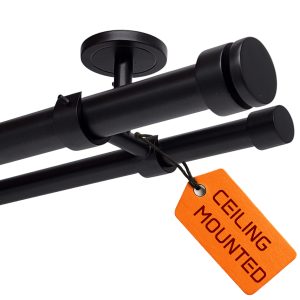
Ceiling, Double
- Holds
- 20 lb
- Length
- 48–84 in
- Projection
- Ceiling mount
- Mount
- Ceiling
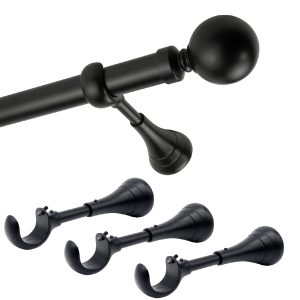
Heavy Duty, Wall
- Holds
- 40 lb
- Length
- 48–84 in
- Projection
- Up to 6 in
- Mount
- Wall
- Choose this ceiling mounted curtain rod for one layer of curtains from the ceiling: floor-to-ceiling panels, windows with no wall above them, bed curtains.
- Choose the ceiling mounted double curtain rod to layer sheers behind blackout curtains. It holds two rods on three ceiling brackets.
- Choose the heavy duty curtain rod for drapes over 20 lb, or when the rod should go on the wall with up to 6 inches of clearance.
- Already have a rod up to 1 inch thick? Ceiling curtain rod brackets mount it on the ceiling without buying a new rod.
Wholesale and Bulk Orders
Trade pricing for interior designers, contractors, property managers, hospitality suppliers and stores.
Install-ready: three brackets and installation kits included.
Or call +1 267 986 1426, 9 AM–6 PM Eastern.
- 6 unitsMinimum per finish: one master carton of rods
- 20%+ offRetail price, better with volume
- 1 business dayIn-stock orders ship from Pennsylvania
- SamplesCheck the finish and build first
FAQ
Mounting, slanted ceilings, curtain height and blackout curtains: what buyers ask about ceiling rods.
Can curtain rods be hung from the ceiling?
Yes, if the rod has brackets made for the ceiling. Wall brackets are shaped to hold a rod out from a wall, not down from a ceiling. This rod comes with ceiling brackets: a flat base that screws up into the ceiling and a short stem that holds the rod below it.
How do I hang a curtain rod from the ceiling?
Mark a straight line on the ceiling at the distance the curtain needs from the wall. Mark three brackets on it, at both ends and in the center. Screw the bases into joists where you can and use ceiling-rated anchors elsewhere. Then load the curtains on the rod and set it in the brackets. The step-by-step guide is above.
Will a ceiling curtain rod work on a slanted ceiling?
It depends on which way the slope runs. If the rod runs along the slope at one height, as under an attic eave, all three brackets sit at the same height and the rod stays level. If the rod has to run up the slope, the brackets end up at different heights and the rod tilts. The bracket base is flat, so on any slope the stem sits at an angle. Hold a bracket in place and check the fit before you drill.
What curtain rods work best for ceiling mounting?
Look for three things: brackets designed for the ceiling, a center bracket on spans over about 5 feet, and a stated weight rating. Also check that the rod is long enough to run past the window on both sides. This rod has three ceiling brackets including the center one, holds 20 lb and adjusts from 48 to 84 inches.
Should curtains go all the way to the ceiling?
They don’t have to, but floor-to-ceiling curtains make most rooms look taller and the windows bigger. They also block more light at the top. If the window is far below the ceiling and you like how it looks, a wall rod 4 to 6 inches above the frame is fine. If the window reaches the ceiling, a ceiling mount is often the only option.
How high should I hang curtains with a 9-foot ceiling?
With a ceiling mount, the rod hangs just below the 108-inch ceiling, so 108-inch panels will be slightly long. Hem them or let them break on the floor. With a wall rod, hang it about halfway between the top of the window and the ceiling, or just under the crown molding, and measure the panels from there.
Can a ceiling mounted curtain rod hold blackout curtains?
Yes, as long as the curtains, rings and liner together weigh 20 lb or less. Most pairs of blackout panels for one window weigh far less. Use all three brackets and hang one panel on each side of the center bracket.
Can I mount this rod on the wall?
Yes. The brackets mount on the ceiling or on the wall. On the wall, the round base screws flat to the wall and the stem holds the rod straight out from it. Use the same three brackets, set at the same height.
Can I buy this rod in bulk?
Yes. Trade pricing starts at one master carton of 6 rods per finish, with discounts from 20% off retail that grow with volume. In-stock orders ship from our Pennsylvania warehouse within one business day. See partner pricing or email [email protected].